Fast Publication Journal: Complete Guide to Quick Research Paper Publication
What is a Fast Publication Journal?
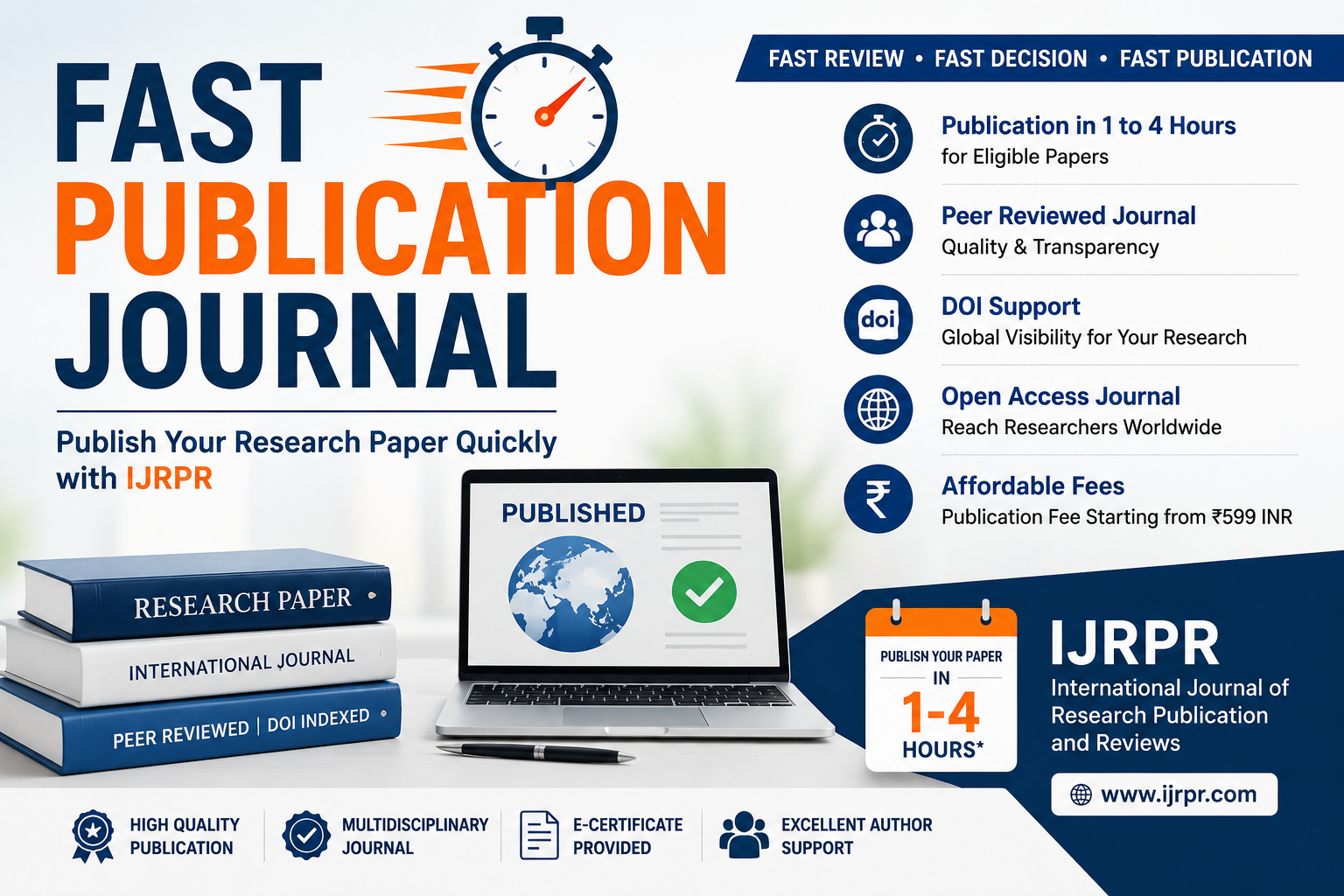
A fast publication journal is an academic journal that aims to reduce the time between manuscript submission and final publication. These journals use streamlined editorial workflows, efficient peer review processes, and digital publishing systems to help researchers publish their work quickly.
Fast publication journals are especially useful for:
- PhD scholars
- Research students
- Faculty members
- Scientists
- Engineers
- Conference authors
- Researchers with submission deadlines
Many authors search for fast publication journals when they need publication proof for degree completion, promotions, project reports, funding applications, or academic evaluations.
Why Researchers Need Fast Publication
Research publication is often time-sensitive. Common reasons include:
Academic Deadlines
Universities may require publication before:
- Thesis submission
- Viva examination
- Degree award
- Project completion
Career Advancement
Faculty members often need publications for:
- Promotions
- Performance evaluation
- Academic recruitment
- Research grants
Research Visibility
Quick publication helps researchers:
- Share findings faster
- Receive citations earlier
- Establish priority of discovery
- Increase academic visibility
How Fast Publication Journals Work
A typical fast publication workflow includes:
-
Manuscript Submission: Authors submit their paper through:
- Online submission portal
- Email submission system
-
Initial Screening: Editors check:
- Formatting
- Scope
- Plagiarism
- Completeness
-
Peer Review: The manuscript undergoes:
- Editorial review
- Expert reviewer evaluation
- Technical assessment
- Author Revision: Authors address reviewer comments if required.
- Acceptance: The editorial team issues an acceptance decision.
-
Publication: The article is:
- Published online
- Assigned volume and issue
- Made available to readers worldwide
Characteristics of a Good Fast Publication Journal
Not all fast publication journals maintain quality. Researchers should look for:
Peer Review Process
A legitimate journal should perform:
- Editorial review
- Quality assessment
- Academic evaluation
DOI Support
Digital Object Identifier (DOI) improves:
- Citation tracking
- Discoverability
- Academic credibility
Open Access Availability
Open access journals allow:
- Free reading
- Global accessibility
- Wider dissemination
Transparent Publication Fees
Authors should verify:
- Publication charges
- Additional service fees
- Copyright policies
Clear Author Guidelines
Reliable journals provide:
- Submission instructions
- Review process details
- Publication ethics policies
Benefits of Fast Publication Journals
- Faster Research Dissemination: Research reaches readers quickly.
- Early Citations: Published papers can begin accumulating citations sooner.
- Improved Academic Profile: Authors can include publications in CVs, research profiles, and promotion applications.
- Global Accessibility: Open access publication enables worldwide readership.
Common Challenges Faced by Authors
- Journal Selection: Choosing the right journal can be difficult.
- Formatting Requirements: Different journals require different formats.
- Reviewer Comments: Authors may need revisions before acceptance.
- Publication Costs: Publication fees vary significantly among journals.
How to Choose the Right Fast Publication Journal
Before submitting a paper, researchers should evaluate:
- Scope Match: Ensure the journal accepts your subject area.
- Review Process: Check whether peer review is performed.
- Publication Timeline: Review average publication timelines.
- DOI Availability: Verify DOI support.
- Indexing and Visibility: Check where published papers are discoverable.
- Publication Fee: Understand all charges before submission.
Research Areas Commonly Accepted
Many multidisciplinary journals accept papers from:
- Engineering
- Computer Science
- Management
- Education
- Pharmacy
- Agriculture
- Commerce
- Mathematics
- Medical Sciences
- Social Sciences
- Humanities
- Applied Sciences
Tips for Faster Publication
Researchers can speed up publication by:
- Following Author Guidelines: Carefully follow formatting instructions.
- Reducing Plagiarism: Ensure originality before submission.
- Using Clear Language: Well-written papers move faster through review.
- Providing Complete Documents: Submit all required forms and information.
- Responding Quickly: Reply promptly to editorial communications.
Frequently Asked Questions
What is a fast publication journal?
A journal that aims to reduce the time between submission and publication while maintaining editorial and review procedures.
Are fast publication journals peer reviewed?
Many fast publication journals conduct peer review, although review timelines may vary.
Do fast publication journals provide DOI support?
Many journals offer DOI support to improve article discoverability and citation tracking.
Can students publish in fast publication journals?
Yes. Students, researchers, and faculty members commonly publish in such journals.
How long does publication usually take?
Publication timelines vary between journals depending on editorial and review requirements.
Conclusion
Fast publication journals play an important role in modern academic publishing by helping researchers share their findings efficiently. When selecting a journal, authors should consider review quality, publication timelines, DOI support, visibility, and publication policies. Choosing a reputable journal ensures that research reaches the academic community quickly while maintaining scholarly standards.
Publish Your Research Paper
Next Article

 IJRPR is an open access journal, and articles are
distributed under the terms of the Creative Commons Attribution-NonCommercial-ShareAlike 4.0 International
License (CC BY-NC-SA 4.0).
IJRPR is an open access journal, and articles are
distributed under the terms of the Creative Commons Attribution-NonCommercial-ShareAlike 4.0 International
License (CC BY-NC-SA 4.0).